
Despite the fact that over the past 150 years, artificially synthesized medicines are used as therapeutic agents, interest in herbal medicine not only does not fade away but even intensifies. A striking representative of traditional medicine, historically used by our ancestors for the treatment of various diseases, is the Chaga mushroom. Modern research into this popular product is rediscovering its powerful therapeutic effects for us.
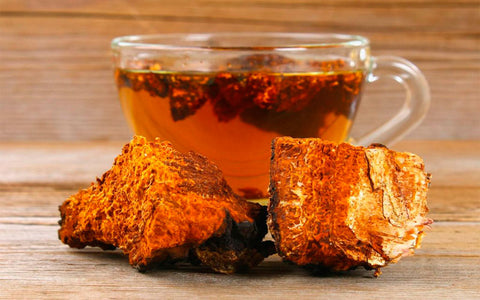
What is Chaga Mushroom?
Chaga, the black birch mushroom, is a sterile form of the Inonotus obliquus (a fungus in the family Hymenochaetaceae), that is parasitic on birch and other trees. It easily survives in extreme climatic conditions. Chaga mushroom is an old folk remedy that has long been used by the population of the northwestern part of Europe, Siberia, Korea, and also Canada for the treatment of gastrointestinal diseases, inflammatory processes, and other diseases.

Benefits of Chaga Mushroom
Chaga birch mushroom has a restorative, antispasmodic, diuretic, analgesic, antimicrobial, reparative, tonic, laxative effect. It normalizes the activity of the gastrointestinal tract and regulates metabolic processes.
When used wisely, Chaga mushroom is invaluable for the body. In folk medicine, it is used to treat certain types of gastritis, and also as a symptomatic agent that in some cases improves the well-being of patients suffering from malignant tumors.
Semi-thick Chaga extract is the main component of the Befungin preparation for enhancing immunity and treating gastritis, stomach, and duodenal ulcers.
Products
Here is what we have at Bear Pharmacy!

Composition: Processed birch Chaga (Inonotus obliquus).
Package Content: Two-layer Kraft/PET bags, 100 g.
Chaga tea is a healthy and delicious tea from the Taiga region of Russia, with a taste similar to black tea.
The recipe for this Chaga tea is very simple pour it with the hot water, wait 5-7 minutes and it is ready! As simple as that. If you don’t want just a regular Chaga mushroom tea, we offer several premixes with the following herbs:
We have a great selection of Chaga tea variations, check them out!
- Chaga original tea
- Chaga tea with Thyme
- Chaga tea with Mint
- Chaga tea with Currant Leaf
- Chaga tea with Sagan-Dailya

Composition: Purified Shilajit; Birch Chaga (Inonotus obliquus) extract; Lactose; Sugar; Potato starch; Magnesium stearate.
Package Content: 100 tablets of 0.55 g.
Chaga Shilajit (a combination of Shilajit and Chaga mushroom extract) is a unique innovative dietary supplement developed by specialists from “Altai Cedar” LLC. This supplement combines the knowledge of ancient Eastern and ancient Russian medicine.
Chaga Shilajit contains more than 77 macro and micronutrients. Its effect is based on the synergy between Chaga extract and purified Shilajit.

- Pour over 50 g of crushed Chaga mushroom with 0.5 l of warm boiled water, infuse for 2 days at room temperature, then filter.
- Squeeze the Chaga particles out and add a bit of boiled water, so that you have 0.5 l of the infusion.
- Drink 1/2 cup six times a day or 1 cup three times a day 30 minutes before meals. Shake the infusion up beforehand.
The course of treatment lasts for 3-5 months. Take a 7-10 day break before the next one.

Composition: Chaga mushroom; Cobalt hexahydrate chloride; Ethanol; Purified water.
Befungin is an immunostimulating tonic based on the Chaga mushroom. It is a clinically tested and approved herbal medicine that has been used extensively over many decades.
Befungin is a viscous, thick liquid of a dark brown color. Please note that under long-term storage conditions precipitation may occur at the bottom of the bottle.